First edition·Published 2025

The first-ever Dictionary of African Philosophy

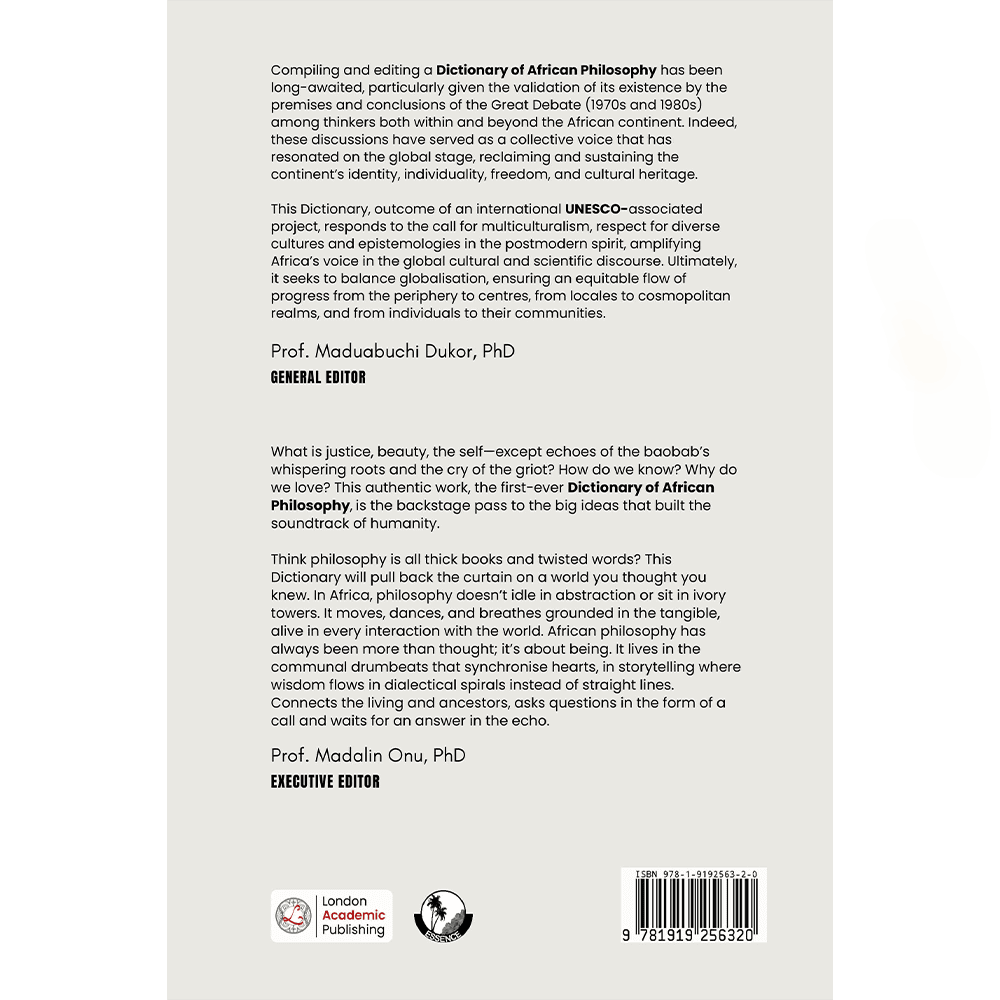
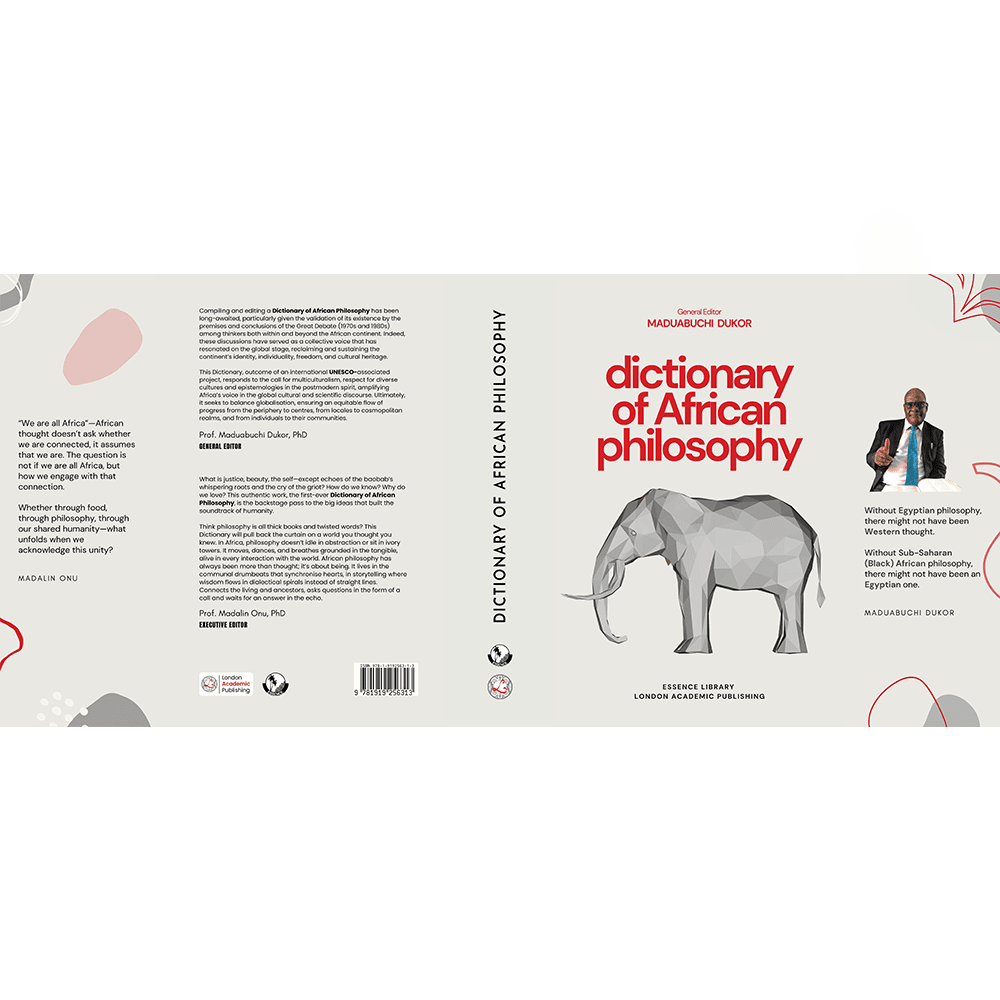
The pioneering reference work devoted to the field — over 180 entries by more than 85 African scholars, the first of its kind anywhere, edited by Prof. Maduabuchi Dukor alongside the Harrington Centre and London Academic Publishing.

General Editor
Prof. Maduabuchi Dukor
Executive Editor
Prof. Madalin Onu
Contributors
85+ scholars
Extent
586 pp · hardcover
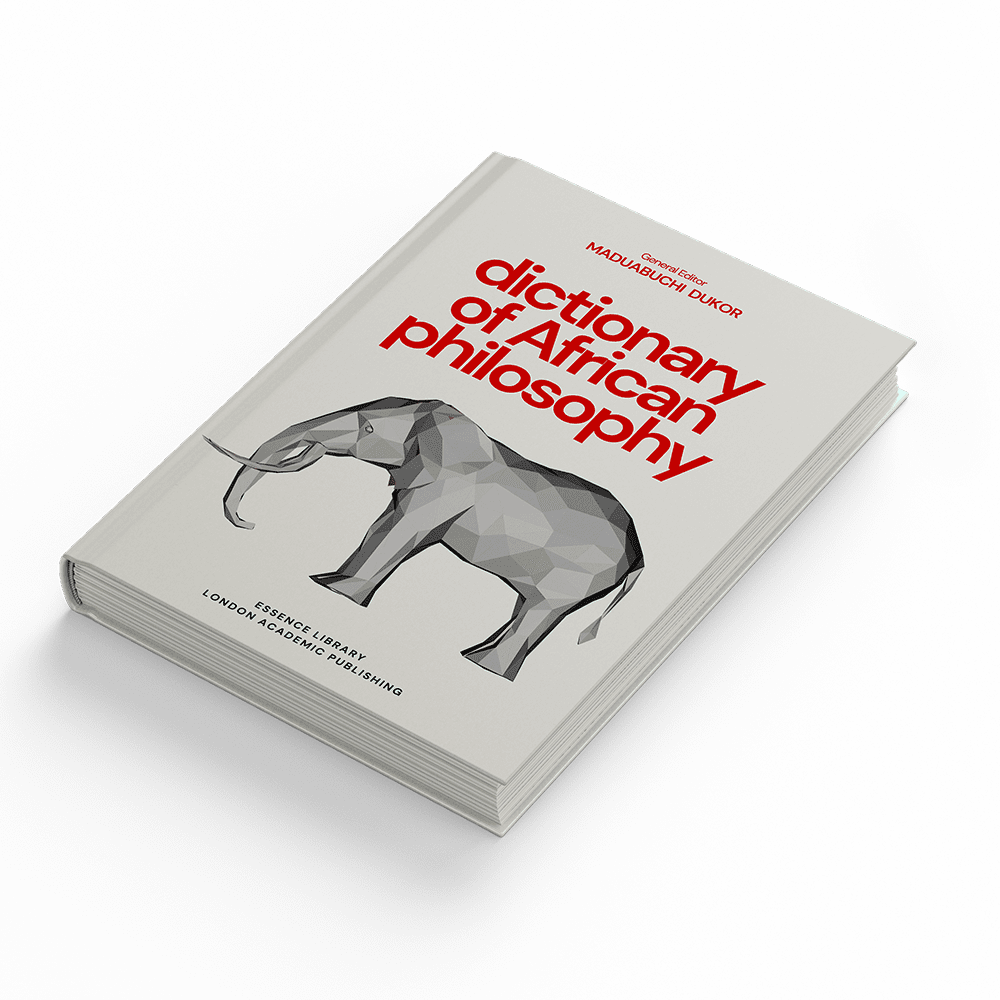
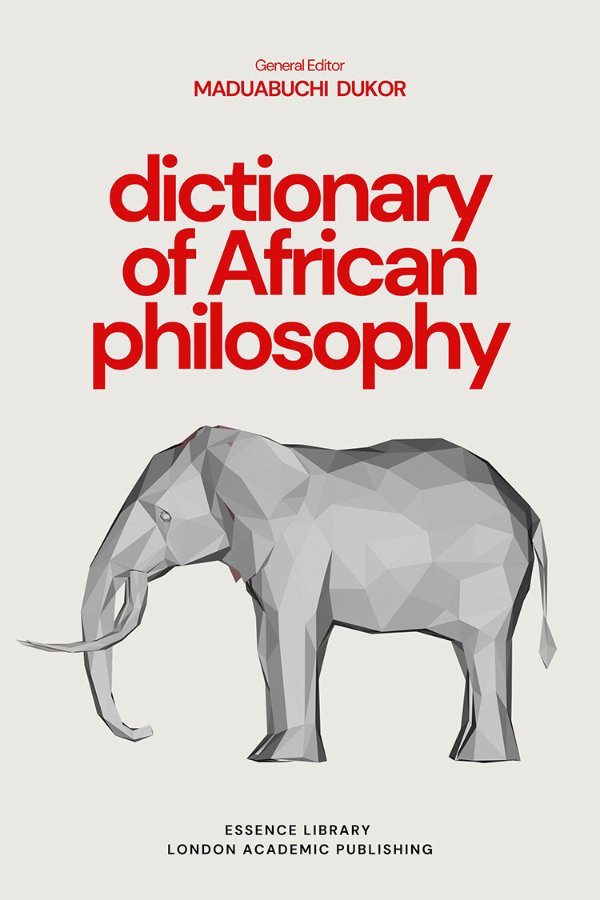
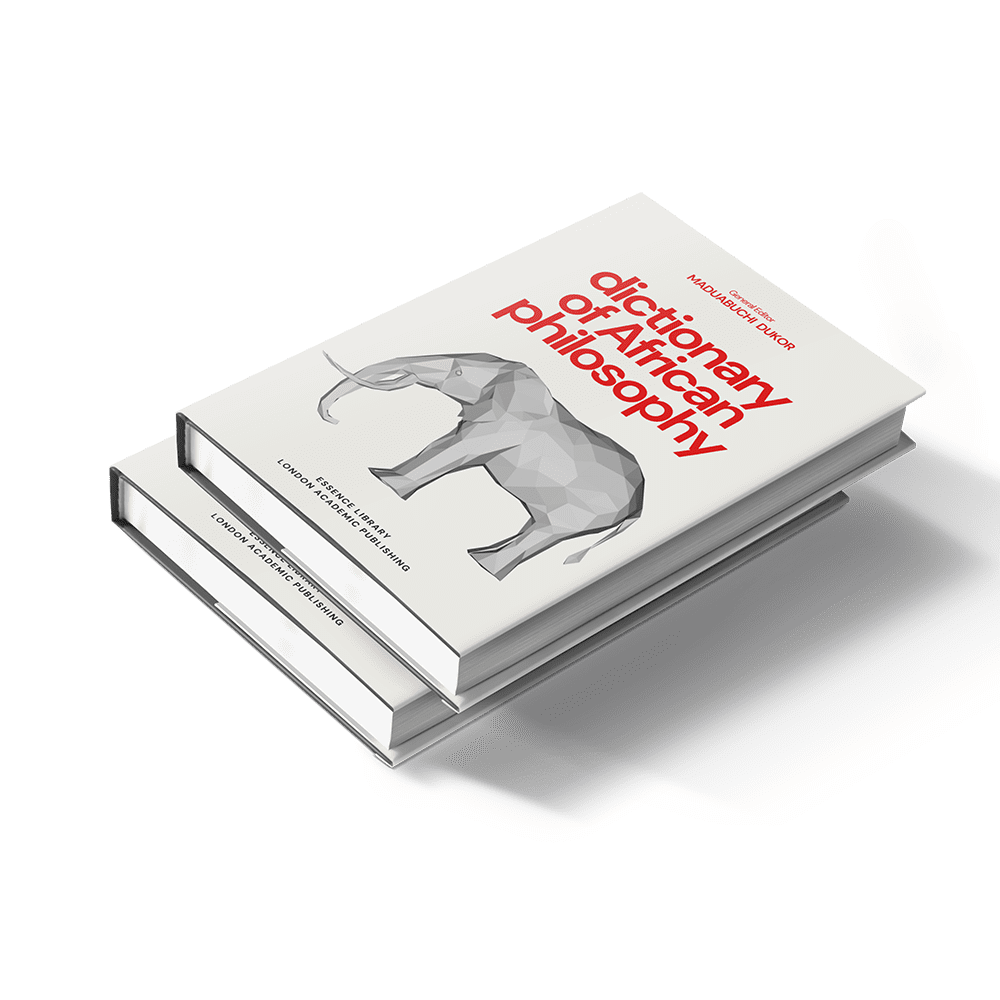
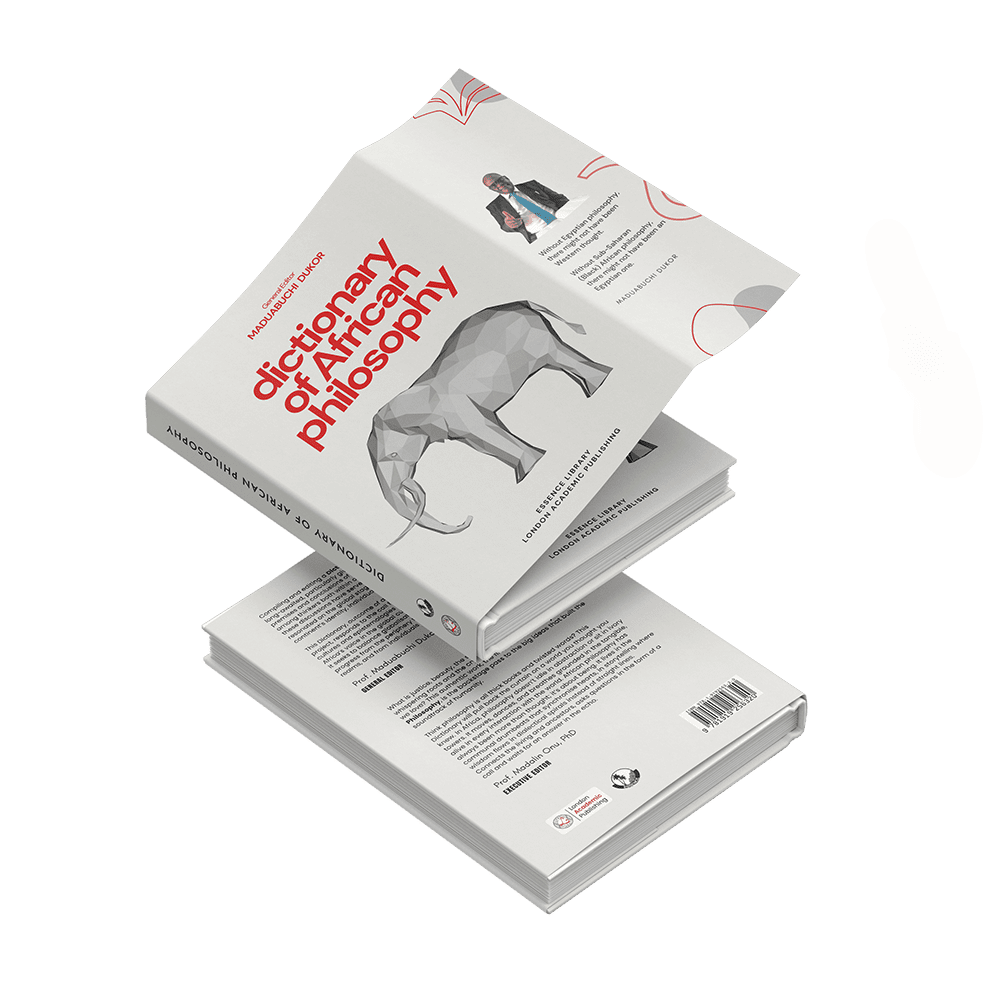
Front cover of the Dictionary of African Philosophy
180+
Entries & cross-references
85+
Contributing scholars
586
Pages, hardcover
2021
Born of a UNESCO project
The Story

For decades the question was asked, and asked again, whether African philosophy existed at all. This dictionary is the long, patient answer — written from within the tradition it describes.

It began in 2021, within a UNESCO World Philosophy Day project, was refined over the years that followed through editorial work across the Harrington Centre and London Academic Publishing, and reached print in 2025: the first reference work to set down, entry by entry, a body of thought long transmitted but never before catalogued.

How it came to be

A project four years in the making — from a UNESCO initiative to the printed page.

2021
A UNESCO project
The dictionary begins within UNESCO's World Philosophy Day initiative to gather and dignify African thought.
Roots
Essence Library
A long-standing centre for African philosophy in Awka — UNESCO-recognised in 2025 — that anchored the project in Nigeria and gave it its scholarly home.
2022–24
Refined at the Centre
Years of editorial work at the Harrington Centre and London Academic Publishing.
2025
Published
The first-ever Dictionary of African Philosophy reaches print, in hardcover, paperback, and eBook.
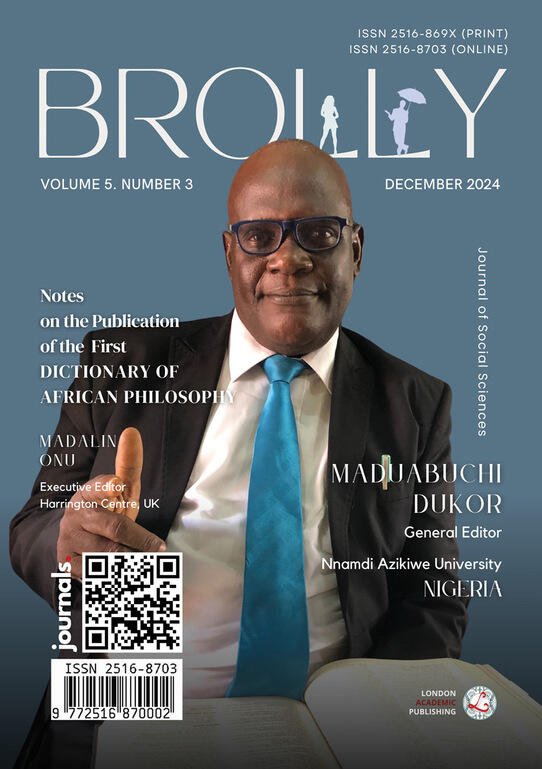
Cover of Brolly. Journal of Social Sciences, Vol. 5 No. 3, featuring the Dictionary of African Philosophy
Front cover of the issue

A cover story

The dictionary made the front page.

The publication was marked on the cover of Brolly. Journal of Social Sciences — the Harrington Centre's peer-reviewed open-access journal — whose issue 5.3 carried both framing essays in full.

The Foreword by General Editor Maduabuchi Dukor situates the work within the Great Debate and the role of UNESCO; the Afterword by Prof. Madalin Onu — Executive Editor of the dictionary and Director of the Harrington Centre — reflects on the Cartesian ego against the collective "I", on Ubuntu, dialectics and African socialism.

JournalBrolly · Social Sciences
IssueVol. 5, No. 3 · Dec 2024
AccessOpen · peer-reviewed
The framing essays · published open access in Brolly 5.3
Foreword

Notes on the First Dictionary of African Philosophy

Prof. Maduabuchi Dukor · General Editor

The General Editor situates the dictionary within the long discourse on African thought — the Great Debate, the role of UNESCO, the birth of the project after World Philosophy Day 2021, and the freedom of a people as inseparable from the freedom of its philosophy.
Afterword

Notes from the Editing of the Manuscript

Prof. Madalin Onu · Executive Editor & Director, Harrington Centre

The Executive Editor reflects on existence and identity in African philosophy — the Cartesian ego against the collective "I", Ubuntu and dialectics, African socialism, Négritude, and the place of this thought in a multicultural, interconnected world.

From A to Z, the field, set down
A–Z
A whole tradition, gathered in one volume
Specimen entries a reading from the pages

Ubuntu

n.p. 487

The southern-African ethic of shared humanity, often rendered "I am because we are." Personhood is not a given of birth but an achievement realised in and through community.

See also communalism · personhood · Geist

Consciencism

n.p. 108

Kwame Nkrumah's philosophy for the decolonised state — a synthesis of African, Islamic and Euro-Christian conscience directed toward the egalitarian society.

See also African socialism · Négritude · Ujamaa

Ethnophilosophy

n.p. 168

The collective worldview embedded in a people's language, proverb and custom — and the long debate over whether it counts as philosophy proper.

See also the Great Debate · sage philosophy

Oji (kola nut)

n.p. 238

Among the Igbo, the kola nut broken in welcome — a small rite that carries metaphysics, ethics and community in a single shared gesture.

See also communalism · ancestors · ritual

Négritude

n.p. 297

The literary-political affirmation of Black cultural value associated with Senghor and Césaire — pride reclaimed against the colonial gaze.

See also consciencism · African socialism

Theistic Panpsychic Humanism

n.p. 472

Dukor's own framework: a metaphysics in which the divine and the human, spirit and matter, are not opposed but held within one order of being.

See also vital force · supreme being

Philosophic Sagacity

n.p. 390

H. Odera Oruka's method of recording the reasoned thought of indigenous sages — evidence of critical reflection beyond the written tradition.

See also ethnophilosophy · the Great Debate

Ujamaa

n.p. 320

Julius Nyerere's Swahili principle of "familyhood" — an African socialism rooted in the extended family rather than in class struggle.

See also consciencism · communitarianism

To name a thing is to grant it a place in the order of knowledge. This dictionary names a philosophy.

— On the purpose of the work

The volume

A reference work, built to last.

More than five hundred entries and cross-references set in a single durable volume — issued by London Academic Publishing in hardcover, paperback and open eBook, and circulated across Nigeria through the Essence Library edition.

Availability
FormatsHardcover · Paperback · eBook
ISBN — four editions
Hardcover978-1-9192563-1-3
Paperback978-1-9192563-2-0
eBook978-1-9192563-3-7
Essence Library978-978-690-138-1
The book
Extent586 pp
Size15.24 × 22.86 cm · 6 × 9 in
PublishedDecember 2025 · First edition
Order the dictionary ↗
Joint publishing

Jointly published:
London, UK and Awka, Nigeria

London Academic Publishing logo
London AcademicPublishing 
 
London
United Kingdom
The publisher

London Academic Publishing®

Refined and revised from 2022 onward, the manuscript found its press here. It was issued in hardcover, paperback and eBook, with the Foreword and Afterword freely readable in its journal Brolly.

london-ap.uk ↗
Essence Library emblem — palms and rock
EssenceLibraryCultural & Scientific
Development Centre
Awka
Nigeria
The scholarly home

Essence Library

A NATCOM–UNESCO-recognised centre in Awka for the study and preservation of African philosophy. It supplied, among others, the network of contributors from which the dictionary grew, and issues the recognised Nigerian edition of the volume.

essencelibrary.org ↗
Prof. Maduabuchi Dukor in academic regalia
Prof. Maduabuchi F. DukorGeneral Editor
Nnamdi Azikiwe University
Prof. Madalin Onu, Executive Editor
Prof. Madalin OnuExecutive Editor
Harrington Centre
Origin of the project

Begun within 2021 UNESCO World Philosophy Day, refined over the years that followed in partnership with Harrington Centre and London Academic Publishing, and brought to print in 2025.

The editors

The scholars who gave the field its book.

Maduabuchi Frank Dukor is Professor of Philosophy at Nnamdi Azikiwe University in Awka, and one of the most prolific voices in contemporary African philosophy. He is the architect of Theistic Humanism and African Predicament Logic, frameworks that read African metaphysics on its own terms rather than through borrowed European categories.

For more than two decades, he has edited Essence: An International Journal of Concerned African Philosophers and convened the Essence Library — a NATCOM–UNESCO-recognised centre dedicated to the study and preservation of African philosophy. The dictionary is, in a sense, the outcome of that work: a single reference in which a widely dispersed tradition is assembled.

Alongside him, the volume was carried to print by Prof. Madalin Onu, Executive Editor and Director of Harrington Centre, whose Afterword reflects on existence and identity in African thought.

A place & its people

Rooted in Awka, in Anambra State.

The editorial heart of the dictionary lies in Awka, south-eastern Nigeria — home to Nnamdi Azikiwe University, and to the markets, festivals and communities whose thought the book records.

Main gate of Nnamdi Azikiwe University, Awka
Nnamdi Azikiwe University, Awka — home of the General Editor.
Landscape in Anambra State, Nigeria
Anambra State, south-eastern Nigeria.
Eke Awka Market
Eke Awka, the historic market.
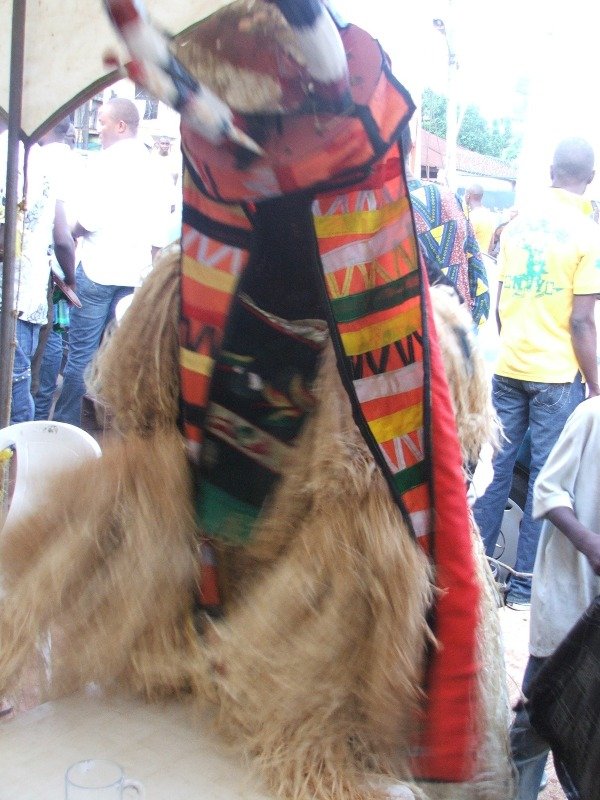
Imeoka festival, Awka
The Imeoka festival — living tradition.

Take it from here

A reference for every shelf.

Available now in hardcover, paperback and eBook from London Academic Publishing, with the framing essays freely readable in Brolly.

£40Hbk · Pbk · eBook + shipping