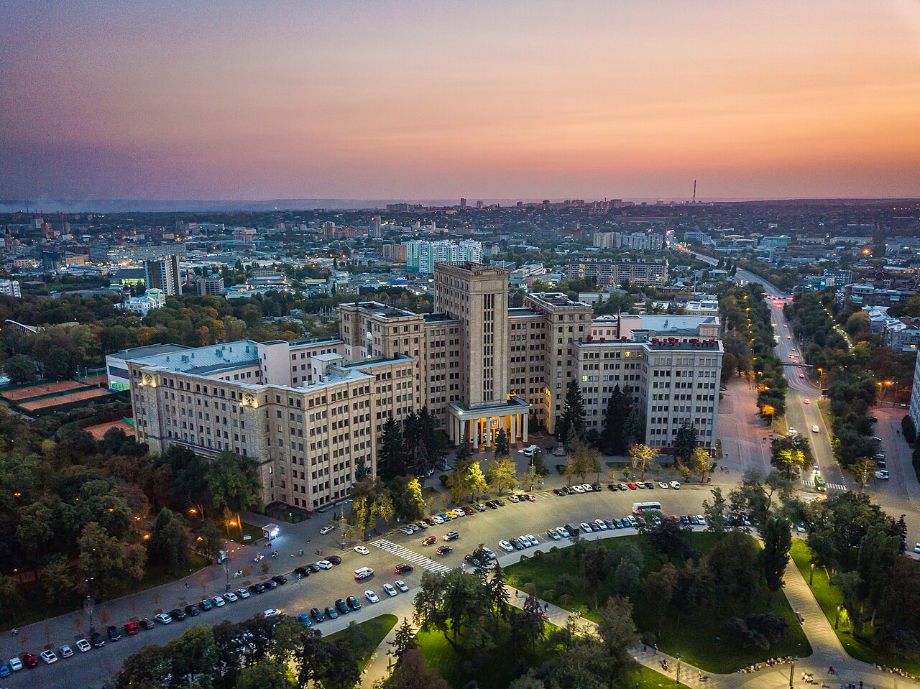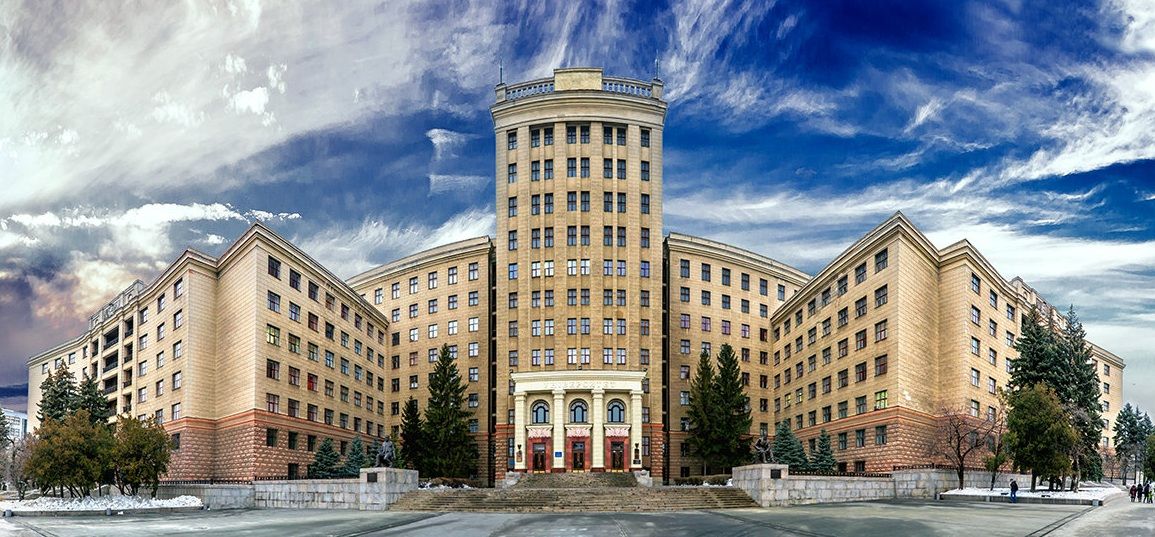
The main building of V. N. Karazin Kharkiv National University on Svobody Square
V. N. Karazin Kharkiv National University · Svobody Square
Project 04 · Language · Peace

Speak for Peace

Two addresses on language, philosophy and human understanding given in Kharkiv, under the banner #SpeakForPeace.

Host
V.N. Karazin Kharkiv National University
2024
Opening Lecture 
2025
Keynote
Setting
Kharkiv, Ukraine
The Programme

Across two successive Aprils, the Harrington Centre was honoured to address Kharkiv's annual conference of language educators — delivering the opening lecture at its sixteenth edition, and a keynote at its seventeenth.

Both addresses advance a single proposition in different keys: that the study of foreign languages is not an ornament of culture but an instrument of peace. Reading the present moment against the long arc of European thought — Vico, Herder, Hegel, Heidegger, and Gadamer — they propose dialogue, translation and the patient fusion of horizons as the alternative to what the first lecture names a “bad infinity” of repeated violence.

The two addresses 2024 — 2025
’2416th edition
Opening lecture
26 April 2024Kharkiv, UkraineOpening Lecture

Language: The Threat That Binds Us Together

A Journey from Enlightenment to Existentialism Towards Humanity

Beginning beneath the shadow of Babel, the lecture reframes human unity not as a single tongue or monolithic culture but as a blend woven from diverse voices. It traces the Enlightenment's pursuit of unity through pure reason, the correctives offered by Herder, Hegel and the neo-Kantians, and the double edge of language in wartime — its capacity for propaganda and for peace alike. In the context of Russia's invasion of Ukraine, it argues, the learning of languages becomes a necessity for peace.

  • Babel Beyond Towers and Speech
    Redefining unity; questioning the need for a singular language or monolithic culture.
  • Tradition Resiliently Challenges Almighty Reason
    Herder, Hegel and neo-Kantian thought on individuality and the role of language in shaping cultures.
  • Language and the War
    Propaganda and its misuse; Heidegger's Sein-zum-Tode and Freud's death drive as a path beyond repetition.
Published open access inBrolly. Journal of Social Sciences — Vol. 5, No. 2 (2024), pp. 9–30
’2517th edition
Keynote
25 April 2025Kharkiv, UkraineKeynote Lecture

Outsiders under Empire

Fusion Philosophy and the Barbarian's Path from Scourge to Sculptor

A sequel in argument and ambition. Drawing on Vico's cyclical ages and Hegel's master–slave dialectic, the lecture reconsiders the figure of the “barbarian” — long cast as savage destroyer — as an agent of historical renewal who carries civilisation into its next iteration. Through Gadamer's hermeneutics and the fusion of horizons, it proposes a method for the digital and AI age: not to collapse contradiction, but to think in its afterglow, turning rupture into relation and the marginalised voice from scourge into sculptor.

  • Chaos and Synthesis
    Vico's ages and Hegel's Weltgeist: history advancing through its others.
  • Sparks Between Shadows
    The dialectics of Fusion Philosophy — Gadamer, the hermeneutic circle, the fusion of horizons.
  • Herder's Barbarian
    A case study in history's unlikely agents: disruption, transition, renewal.
  • Beyond Binary
    Thinking in the afterglow of contradiction — toward healing, synthesis and projection.
Published open access inBrolly. Journal of Social Sciences — Vol. 6, No. 1 (2025)

A shared lineage

History advances through its others, not by excluding them.

The thread running across both addresses

Vico
The cyclical ages of gods, heroes and peoples — history as recurrence.
Herder
Language as the soul of a people; the barbarian reconceived as agent of change.
Hegel
The master–slave dialectic and the movement of world-spirit toward freedom.
Gadamer
Hermeneutics and the fusion of horizons — meaning made between past and present.
Heidegger
Being, time and authenticity; the encounter of language with existence.
AI Age
The new outsider — a marginalised voice amplified through bandwidth and algorithm.
Bearing witness

Under fire, the teaching did not stop.

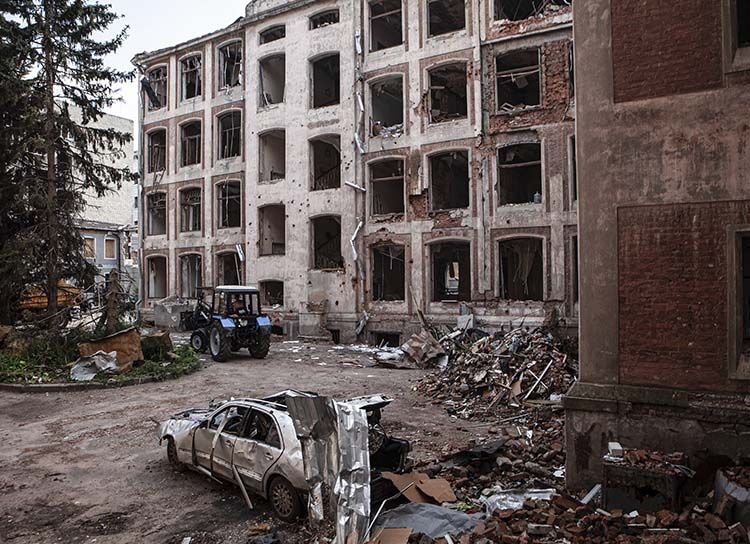
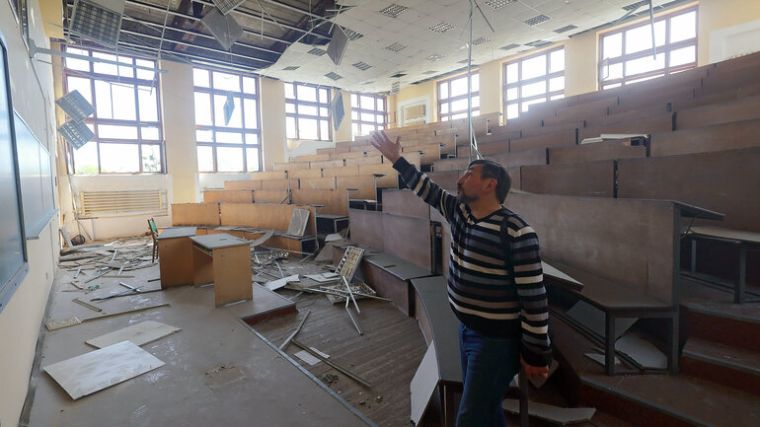
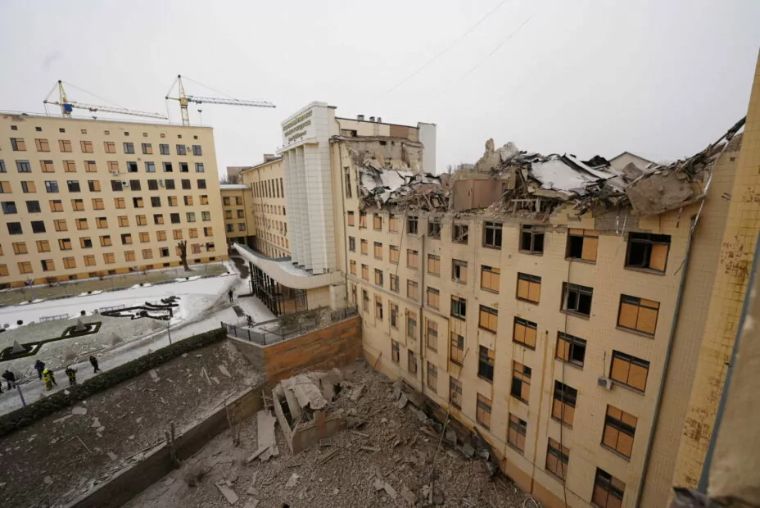
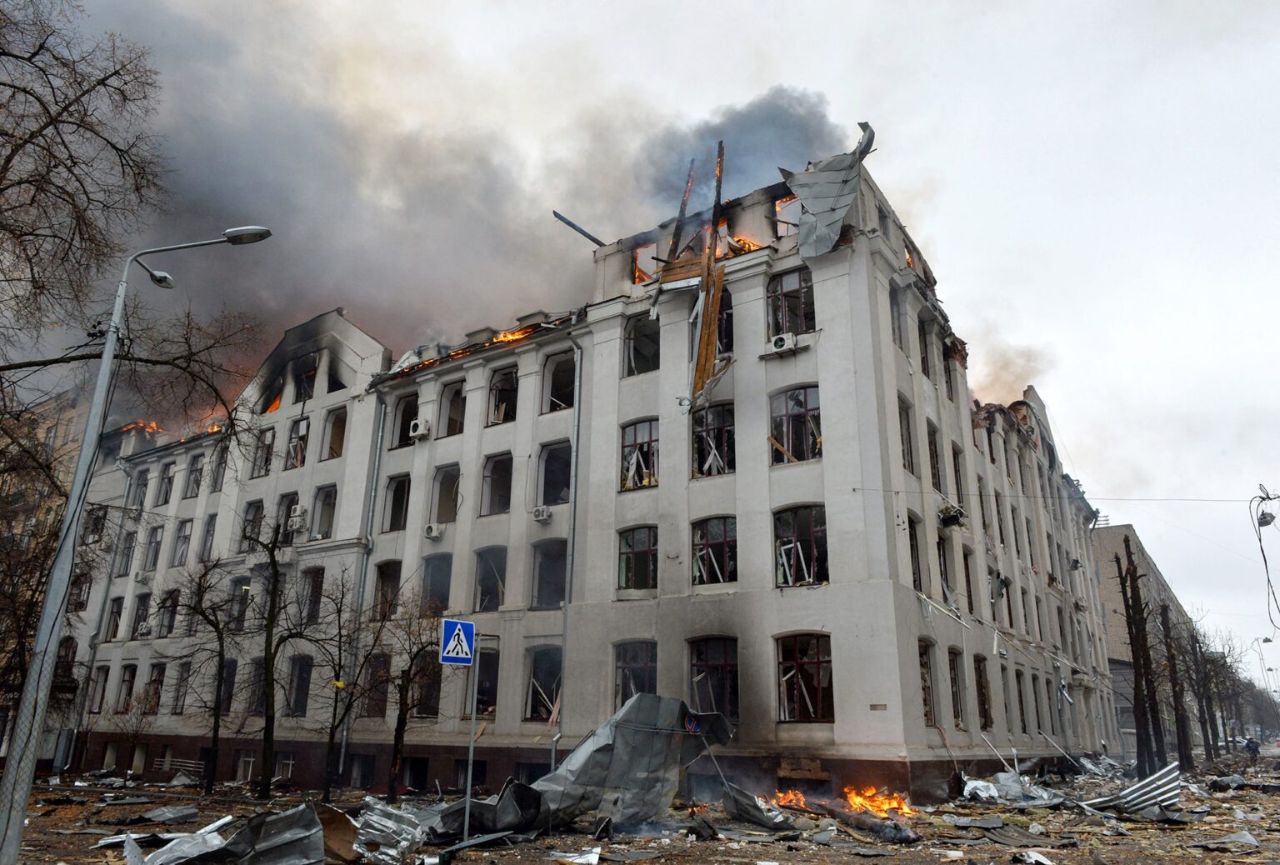
Since February 2022, Russian shelling has damaged or destroyed buildings of the university; classes and this conference moved online and carried on. These photographs are part of the record — and the measure of the resolve behind two quiet gatherings for peace.

The Economy Department building of Karazin University ablaze after Russian shelling
The Economy Department building of Karazin University in flames after Russian shelling — Kharkiv, 2 March 2022.
A destroyed car in the courtyard of the economics department
A destroyed car in the courtyard of the economics department — 8 August 2022.
A lecture hall at Karazin University wrecked by shelling
A lecture hall, wrecked by shelling — Kharkiv, May 2023.
Clearing and reconstruction amid the damaged university buildings
Clearing and rebuilding amid the ruins — the patient work of return.

Photographs documenting the war's impact on the university, Kharkiv, 2022–2023.

Coat of arms of V. N. Karazin Kharkiv National University, bearing the year 1804 and the motto Cognoscere · Docere · Erudire
The host

A university that would not adjourn.

The Karazin University main building at dusk, overlooking Kharkiv
The main building at dusk, overlooking Kharkiv · School of Foreign Languages

Founded in 1804, V.N. Karazin Kharkiv National University is one of the oldest universities in Eastern Europe and among the earliest established in modern Ukraine. It is associated with three Nobel laureates: the biologist Ilya Mechnikov (Medicine, 1908), the physicist Lev Landau (Physics, 1962), and the economist Simon Kuznets (Economics, 1971). Its School of Foreign Languages convenes the annual International Conference on the Methodology of Teaching Foreign Languages, the forum at which both addresses were given.

Today, that heritage persists under the persistent threat of drones, missiles, and bombardment. The very fact that the conference takes place is itself evidence of this continuity. Scholars and students gather, and the work of teaching languages and engaging with one another’s histories persists, sustained by perseverance and courage, which the Centre is proud to support.

220+
Years of scholarship
17
Conference editions by 2025
2
Wartime addresses contributed
The conference at the School of Foreign Languages ↗